
Hundreds of playgrounds set to close
Research undertaken by the API has uncovered the extent to which local authorities across the country have been closing children’s playgrounds.
This new research reveals that between 2014/15 and 2015/16 local authorities across England closed 214 children’s playgrounds, and when asked about future plans they admitted their aim to close a further 234.
These closures come at a time when childhood obesity and wellbeing are high on the Government’s agenda.
Local authorities cited lack of budget to maintain, repair or replace equipment as reasons for the closures. There is no longer dedicated funding for playgrounds from central government or grants from third sector institutions like the Big Lottery Fund, so provision and upkeep of play spaces falls on local authority budgets which are also reducing.
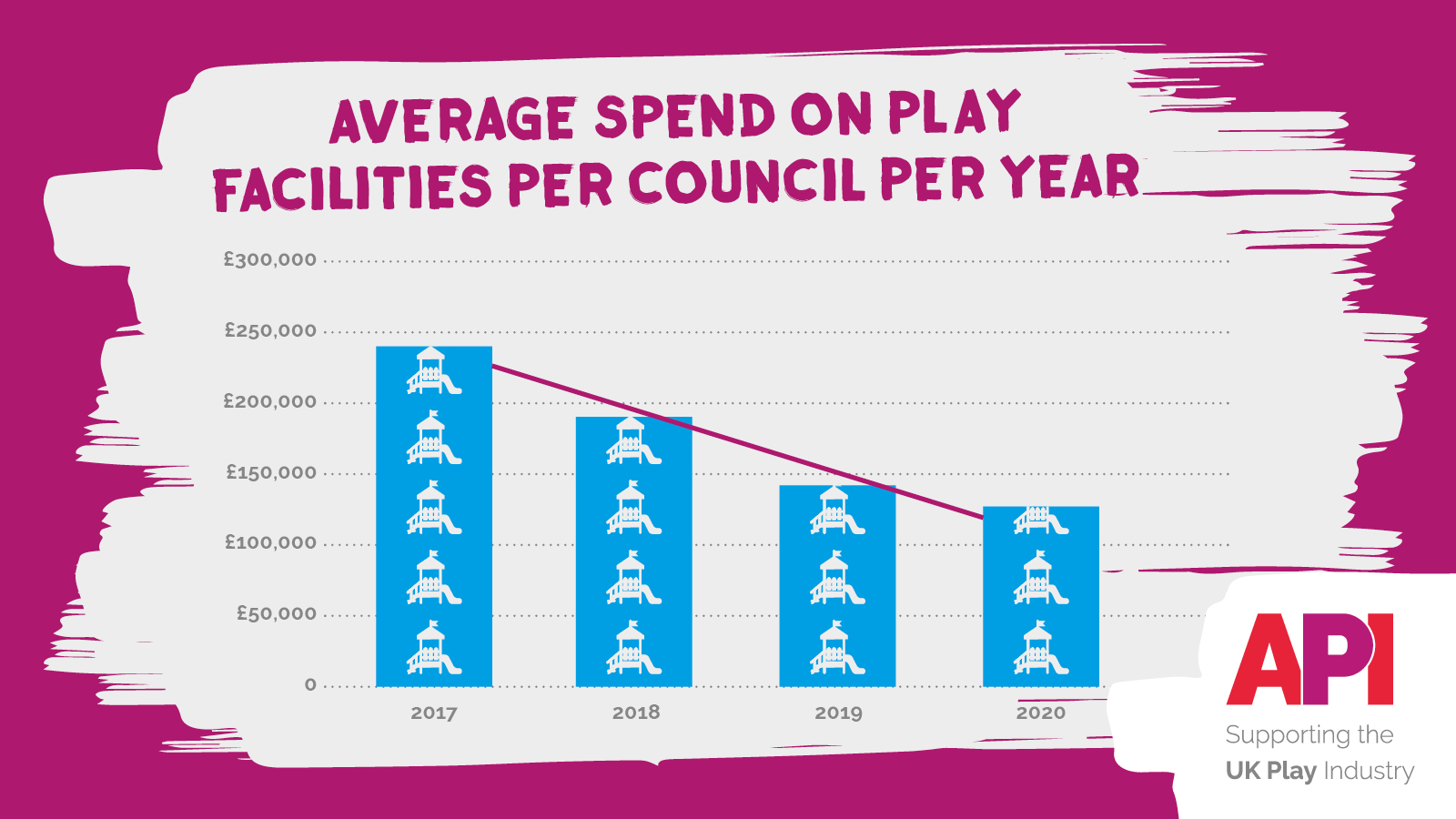
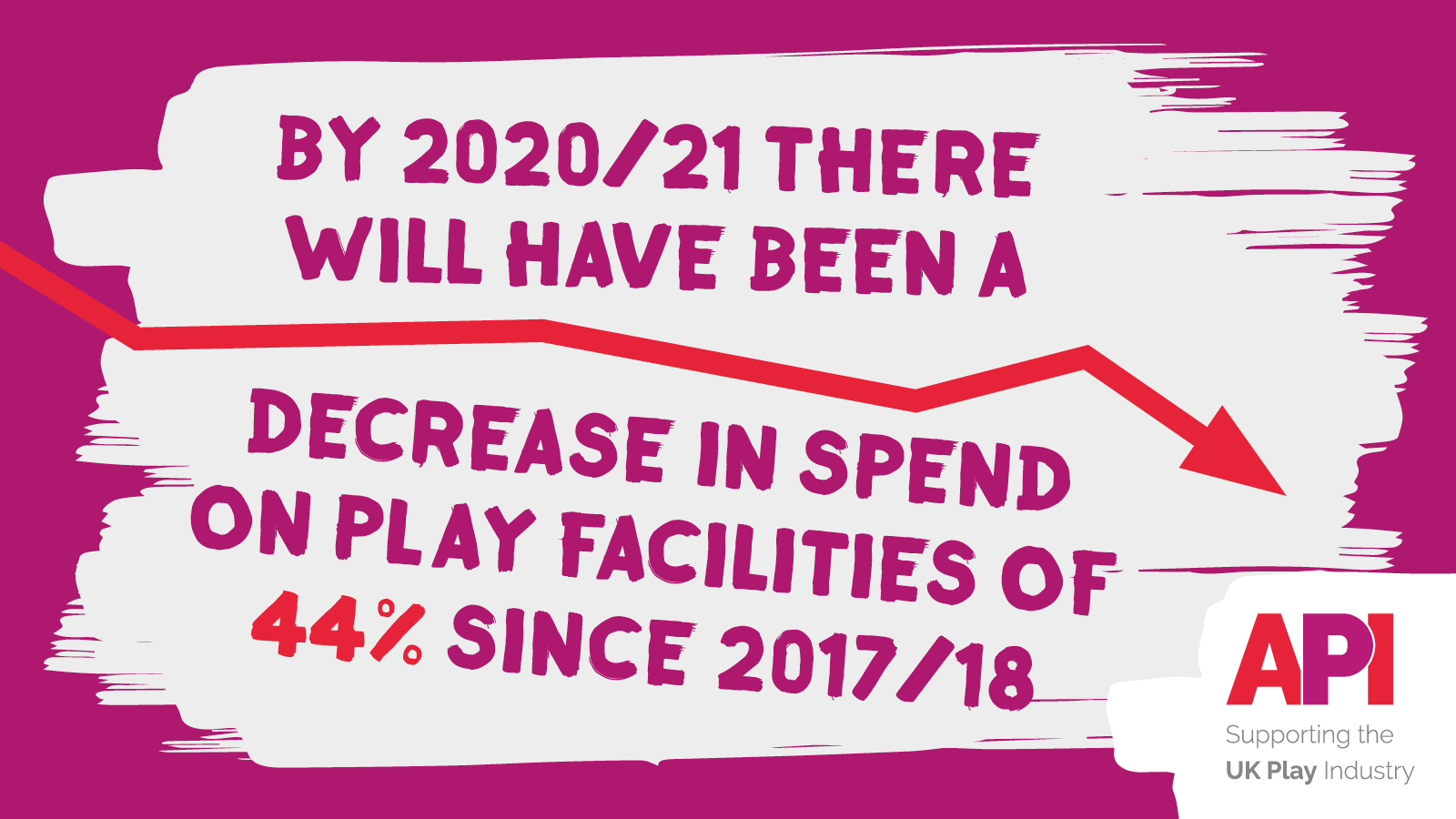
In its battle against childhood obesity the Government should not restrict its interventions to schools or formal sports clubs, but should look at other local provision that can improve a child’s activity level. The closure of public playgrounds – which take away these opportunities to be active at the same time as we are trying to tackle childhood obesity – is counterproductive.
We need a clear and unequivocal show of support for play and activity and the benefits it brings to young people. The lost playground provision that our research has uncovered should be replaced at a minimum – but this would only be a sticking plaster. An investment of £100 million could lead to an increase in the number of playground facilities that are available for children to access across the country. We estimate that would provide a further 1,600 playgrounds and play spaces which is only 10% rise on the number that local authorities reported to be running in 2011.
Press Release: 14.04.2017
Research undertaken by the Association of Play Industries has uncovered the extent to which local authorities across the country have been closing children’s playgrounds.
This new research revealed that between 2014/15 and 2015/16 local authorities across England closed 214 children’s playgrounds, and when asked about future plans they admitted their aim to close a further 234. These closures come at a time when childhood obesity and wellbeing are high on the Government’s agenda. Commenting Mark Hardy, Chairman of the API said: “With increasing childhood obesity and the health benefits of activity and play well known, now is not the time for community playgrounds to be closing. This action goes against the Government’s clear intention to get children more active and needs to be stopped as quickly as possible. Our survey revealed a 37% cut in Government funding to local authorities.” Their report published today, ‘Nowhere to Play’, shows that £100 million could reverse the decline and get us back on track to increase the number of playgrounds available to children across the country. We are also realistic in realising in this period of austerity that direct government support may simply not be available and therefore urge government to support reinstatement of funding from the Big Lottery. “We know that money is tight for councils across the country, but we can’t just stand by and watch as children’s playgrounds close. We are calling on the Government to halt this decline and invest in the next wave of playgrounds to ensure our children have access to free play and activity,” adds Hardy.
--END--
EDITORS NOTES
A Freedom of Information Act request to all councils, carried out by the Association of Play Industries, revealed the following number of playground closures:
• 2014/15: 112
• 2015/16: 102
The request also asked for future plans to close playgrounds and revealed the following number of playgrounds earmarked for closure:
• 2016/17: 80
• 2017/18: 103
• 2018/19: 51
Figures for 2017/18 and 2018/19 do not include information from over a third of councils questioned as they had yet to make plans for this time.
Key Contacts:
- Mark Hardy, Chairman, Association of Play Industries M: 07933 686222
- Helen Griffiths, Chief Executive, Fields in Trust M: 07946 188371
- Dr Amanda Gummer, Managing Direct/Founder, Fundamentally Children M: 079683 27099
- Peter Barlow, Director Yorkshire Play M: 07549 179995
- Deborah Holt, Association Manager, Association of Play Industries M: 07969 533915
The Association of Play Industries (API) www.api-play.org is the lead trade body within the play sector and campaigns at the highest levels for policy recognition for play. Its members are leading manufacturers, installers, designers and distributors of both outdoor and indoor play equipment and safety surfacing. Founded in 1984, the API currently has 66 members.
Follow us on Twitter: @apiplay #Nowhere2play
The API operates under the umbrella of the Federation of Sports and Play Associations (FSPA), the national trade body responsible for representing 13 Associations in the UK’s sport and play industries. www.sportsandplay.com
Media Coverage
Media: Nationals
Daily Mail – Richard Little John Column
Others
Centre of Social Justice – The Leader Column
British Association of Landscape Industries
Radio
BBC Radio Cambridgeshire – 13th April 2017 10:20am The Big Conversation Paul Stainton
LBC Radio – 13th April 2017 09:35am
LBC Radio -13th April 2017 Sheila Fogarty Show
BBC Radio Essex – 18th April 2017 07:35am Sadine Nine
Endorsements
The following organisations have kindly offered their words of support for our Nowhere to Play report:
Helen Griffiths, Chief Executive, Fields in Trust
“Play is the first step children take towards physical literacy and an active lifestyle and therefore investing in play spaces and securing their future should be a priority in combating the negative health impacts of a sedentary population. Parks and playgrounds are vulnerable to closure in these challenging times and it’s important that we revalue the enormous contribution they make to our communities. Fields in Trust welcomes this new research from the API and supports the call for increased investment that will positively impact the health and wellbeing of children and young people.”
Dr Amanda Gummer, Founder, Fundamentally Children
Any reduction of play facilities in communities is short-sighted and detrimental to the development of future generations. Outside play is a vital component of a balanced play diet – it’s like the fruit and veg of a nutritional diet- very difficult to get too much of. Playing outside increases activity -helping in the fight against obesity, promotes social interaction – helping in the fight against mental illness and social isolation, reduces stress and makes the neighbourhood safer for everyone – the more people using outside spaces, the closer the community and the safer it becomes. With cars being made safer for drivers (leading to higher speeds) and increased traffic on the roads, it’s more important than ever that children have safe spaces to play.”
Julian Knight, MP for Solihull and former member of the Communities and Local Government select committee
“This report highlights a deeply concerning trend away from children’s playgrounds. At a time when we are all trying to combat childhood obesity and promote exercise we need to encourage children’s play. I think it would be most helpful if the likes of the Big Lottery fund could be persuaded to look again at projects which promote children’s play.”
Lord Porter, Chairman of the Local Government Association
Councils are committed to promoting healthy lifestyles among young people and recognise that access to playgrounds and sports facilities are an important part of that. They want to do everything they can keep our parks and playgrounds intact but are doing this in the face of unprecedented budget constraints. Given on going funding reductions, many councils continue to have to make difficult decisions about which services are scaled back or stopped altogether. Decisions like this are never taken lightly and councils are exploring new ways to fund and maintain these facilities. Many are also working with their communities to help maintain them, or through crowd funding for new equipment.
Wayne Grills, BALI’s Chief Executive
“The British Association of Landscape Industries fully endorses this excellent report by the API. As we witness the likely degradation of our cherished parks and public spaces through lack of investment, so, too, will we see a generation of young people and adults with mental and physical health problems exacerbated by lack of access to outdoor play and physical activity. The loss of playgrounds up and down the country is unforgivable. We should look at a different model where outdoor ‘play’ and exercise for all ages is somehow integrated so that a trip to the local playground involves the entire family, from children to grandparents.
Peter Barlow, Director Yorkshire Play
“YORKSHIRE PLAY, the not-for-profit charitable organisation promoting play across Yorkshire and the Humber, endorses the API’s report highlighting the deficiencies in funding for the on going maintenance of children’s play across the country. Yorkshire Play echoes the call for the Government to act on this report by allocating targeted funds to ensure that the current level of provision can be maintained and to recognise the significant health benefits which outdoor play brings at a time when childhood obesity is at a critically high level.”
Keith Dalton, Vice Chairman, Register of Play Inspectors International
“The RPII (Register of Playground Inspectors International) has seen first-hand the decline in play provision and the steady worsening of the condition of many play areas around the country. Play is absolutely vital to children’s health & wellbeing and public provision of such facilities has an important role to play in helping to ensure that children learn about risks in environments where the level of risk can be managed. The RPII welcomes this new research from the API and encourages the call for increased investment to help ensure the wellbeing of children and young people.”
David Kilby, National Counties Playing Fields Association
“The National Counties Playing Fields Association and Shropshire Playing Fields Association welcomes this new research from the API and supports the call for increased investment that will positively impact the health and wellbeing of whole communities including children and young people.”
Jane Montgomery, Federation of Sports and Play Associations
“The FSPA welcomes this important and timely research and joins with the API in calling on the government for a clear show of support for play and activity and the benefits it brings to children. A government investment of £100m now could turn the tide and ensure that children in all areas can access good quality areas in which to play.”